 how-to
7 Steps to Secure Auction Item Deposits
Last Updated: November 1, 2026
Quick Summary
Secure auction item deposits by requiring a deposit before bidding, collecting it through a traceable payment method, and issuing a receipt for every payment. Keep a deposit ledger, match deposits to winners at close, and apply, hold, or refund each one under a published policy.
- Publish the deposit amount and refund terms on every listing so bidders can check them before bidding.
- Choose a payment method that creates a timestamped record, and avoid informal channels that leave no trail.
- Issue a receipt for every deposit showing the bidder, listing, amount, date and payment method.
- Track every deposit in one ledger with a status of held, applied, refunded or forfeited.
- Reconcile the ledger against bank and processor records weekly during sales and at every close.
Table of Contents
- How Auction Item Deposits Work and Why Sellers Require Them
- Choose a Safe Payment Method for Collecting the Deposit
- Verify the Auction Site and Its Bidders Before Taking Any Deposit
- Set a Clear Auction Deposit Refund Policy Before the Sale Opens
- Issue an Auction Deposit Receipt Every Time You Collect Funds
- Track, Hold and Reconcile Deposits From Start to Finish
- Avoiding Deposit Scams and Red Flags in Online Auctions
- Put Your Deposit Process to Work on Your Next Listing
- Frequently Asked Questions
Auction item deposits are the money a bidder hands over before they can bid, and they protect the seller when a winning bidder backs out. Sellers who skip this step often end up chasing unpaid balances or losing items to bidders who never intended to pay. This guide from KVSAuctions.com walks through practical steps to collect, track and return deposits safely, whether you sell one item or run a steady stream of listings.
How Auction Item Deposits Work and Why Sellers Require Them
An auction item deposit is an amount a bidder must submit before bidding on a listing. The GSA Auctions guide describes a bid deposit as an amount that must be submitted before bidding when the item description page requires one.
Deposits are not required on every listing. Requirements and amounts are set item by item, so always check the description page before you open the sale.
Choose a Safe Payment Method for Collecting the Deposit
The payment method you accept matters as much as the amount. Cash is hard to trace, and personal checks can bounce days after the sale. Many sellers prefer payment methods that leave a clear record and can be reversed only under defined rules.
- Use a method that creates a timestamped record
- Avoid accepting payment through informal channels that leave no trail
- Confirm the payment has cleared before you release the item or confirm the bid
Keep the payment method consistent across listings so buyers know what to expect.
Verify the Auction Site and Its Bidders Before Taking Any Deposit
Before you ask anyone for money, confirm that the platform you use is legitimate.
Verify bidders as well. Confirm names, contact details and, for higher-value items, identity. A bidder who refuses to share basic details is a warning sign.
Set a Clear Auction Deposit Refund Policy Before the Sale Opens
A deposit policy is not a sentence buried in the terms, it is the document that decides who wins a dispute. Write it before the sale opens, publish it on every listing page, and repeat the key terms on the receipt. The goal is that a bidder can answer four questions without asking you: How much is the deposit?
Decide whether a deposit is appropriate at all
Not every listing needs one. A deposit makes sense when the item is high-value, when the bidder pool is unknown, when pickup requires scheduling or storage, or when the item is donated and the nonprofit cannot absorb a non-paying winner. Skip the deposit on low-value lots where the administrative cost of collecting and refunding exceeds the protection it buys.
Size the deposit to the risk, not to a habit
A common pattern is to set the deposit as a percentage of the opening bid or of the estimated value, with a floor and a cap so small lots are not overburdened and large lots are still protected. Another common approach is a flat deposit per bidder that is credited toward any winning purchase. Whichever you choose, state the formula in the listing so bidders can calculate it themselves.
Define what the deposit covers
Spell out whether the deposit is applied to the purchase price, held separately as a good-faith bond, or used to cover specific costs such as removal, storage, or re-listing. If the deposit is a cleaning or removal deposit, say so and describe the condition that triggers a partial or full forfeiture. Bidders accept forfeiture far more readily when the trigger is objective, for example, an item not removed by the published deadline.
Disclose refund, forfeiture, and cancellation terms
Publish, in plain language:
- The hold period, how long you keep a deposit after the auction closes before refunding a losing bidder
- The conditions for a full refund, including a canceled sale or a materially misdescribed item
- The conditions for partial or full forfeiture, such as failure to pay the balance or failure to remove the item by the deadline
Make the policy enforceable
A policy is only as strong as its record. Require bidders to acknowledge the terms at registration or at the moment they place a bid, and keep that acknowledgment with the deposit record. If your platform supports it, use a checkbox that timestamps acceptance. For donated items, confirm with the donor in writing that the deposit terms apply and who holds the funds.
Issue an Auction Deposit Receipt Every Time You Collect Funds
Every deposit should come with a receipt. A receipt proves the amount, the date, the listing and the payment method. Without one, a disputed deposit becomes your word against the bidder's.
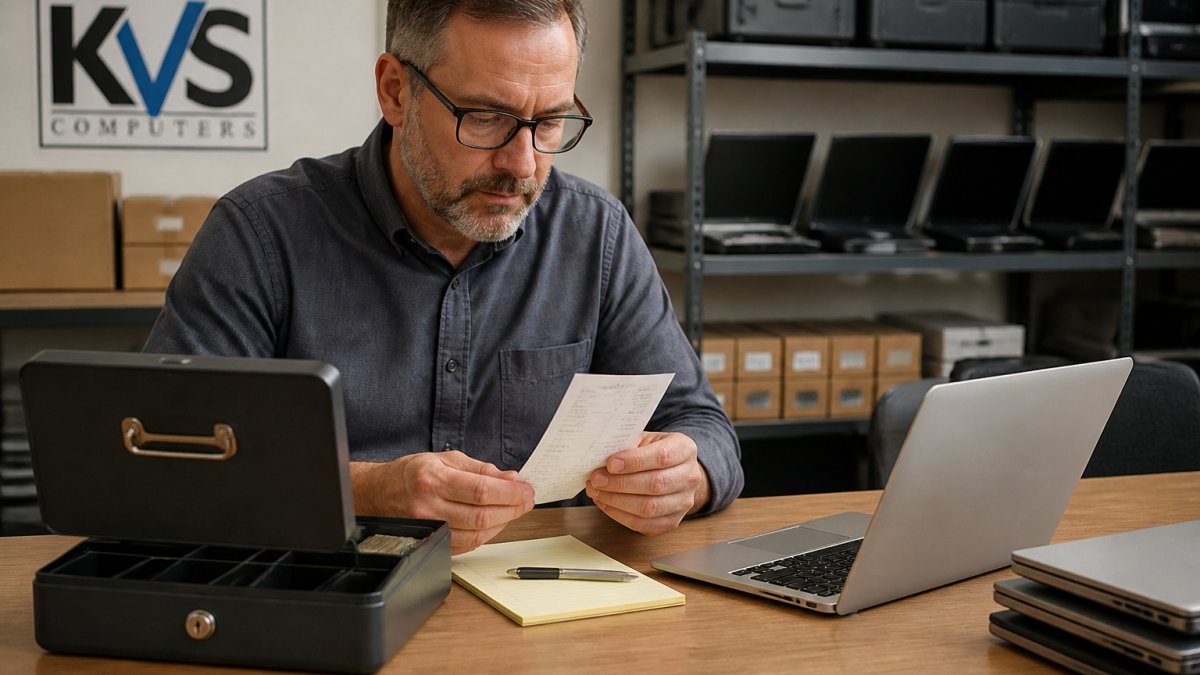
A simple receipt should include:
- The bidder's name and contact details
- The listing number or item description
- The exact amount received and the date
- The payment method used
Keep a copy of every receipt. These records make reconciliation much easier at the end of the sale.
Track, Hold and Reconcile Deposits From Start to Finish
Tracking is where most deposit problems actually surface. A deposit that is collected but never matched to a winner, or refunded twice, or applied to the wrong invoice, turns a protective tool into a liability. Build a single deposit ledger and run the same workflow on every sale.
Build the deposit ledger
Keep one row per deposit with, at minimum:
- Deposit ID and date received
- Bidder name and contact details
- Listing number and item description
- Amount received and payment method
A spreadsheet works for small volume; an auction platform with a deposit field works better because the ledger stays attached to the bidder record. Either way, the ledger, not memory, is the source of truth.
Match deposits to winners at close
When the auction closes, run a three-way match: the winning-bid report, the deposit ledger, and the bank or processor statement. Every winning bidder should have a deposit on file, and every deposit should point to a bidder. Flag three exceptions immediately: a winner with no deposit, a deposit with no matching bidder, and a deposit amount that does not match the published terms.
Apply, hold, or refund, and record which
For each deposit, choose one outcome and write it down:
- Applied: credit the deposit against the winning balance and issue an updated invoice showing the credit.
- Held: keep the deposit while the bidder pays the balance or schedules pickup, with a stated release date.
- Refunded: return the deposit to losing bidders and to winners who completed the transaction, using the original payment method where possible.
- Forfeited: retain the deposit under the published terms, notify the bidder in writing with the reason, and record the forfeiture.
Run a refund workflow, not a refund favor
Refunds go wrong when they are handled ad hoc. Use a short, repeatable process: confirm the outcome against the ledger, issue the refund through the processor, send a receipt showing the refund amount and date, and mark the ledger row closed.
Reconcile on a schedule
Reconcile the ledger against processor and bank records weekly during active sales and at the close of every auction. The check is simple: every held deposit has an outcome, every refund appears in the processor statement, and the ledger total matches the funds actually on hand. Sellers who reconcile weekly catch duplicate refunds and unapplied deposits while they are still easy to fix.
Handle disputes with the record you built
When a bidder disputes a forfeiture or a missing refund, the ledger plus the receipt plus the acknowledged terms usually resolves it without escalation. Respond in writing, cite the specific term and the date the bidder accepted it, and state the resolution. If the dispute cannot be resolved internally, follow the dispute process published in your terms and keep every message with the deposit record.
The steps below summarise how each deposit should be tracked and closed out, based on the workflow described in this section.
| Step | What to do | Timing |
|---|---|---|
| Build the deposit ledger | Keep one row per deposit with amount, receipt and status | From the first deposit received |
| Match deposits to winners | Run a three-way match of winners, ledger and bank statement | At auction close |
| Apply, hold or refund | Choose one outcome per deposit and record it | After close, per published terms |
| Run a refund workflow | Confirm outcome, refund through processor, send receipt, close row | Each refund, handled the same way |
| Reconcile the ledger | Check every deposit has an outcome and totals match funds on hand | Weekly during sales and at close |
Avoiding Deposit Scams and Red Flags in Online Auctions
Deposit scams often look like ordinary bids. Be wary of bidders who push you to move payment off the platform, who ask for more than the stated deposit, or who create several accounts to bid on the same item.
Hidden costs can also cause trouble. If an item is sold as-is, the risks rise further, so review the sale terms carefully.
Stop the sale and document everything if a bidder pressures you. Keeping records is your strongest defense.
Put Your Deposit Process to Work on Your Next Listing
Start with one listing and run the full process: set the requirement, collect with a receipt, track the deposit, and reconcile when the sale closes. Then refine the steps based on what caused friction.
Once the process runs smoothly on one listing, apply it to every sale. KVSAuctions.com offers government surplus laptops, electronics and refurbished technology through auction, fixed-price and classified listings.
Frequently Asked Questions
What is an auction deposit, and why do auction sites require one?
An auction deposit is an amount a bidder submits before bidding, held to show the bidder is serious and able to pay if they win. Requirements and amounts are set per item. Deposits reduce the risk of non-paying bidders and protect sellers from wasted time. Check each listing's terms, because the requirement and amount vary from item to item and are not standardized across platforms.
Are auction deposits refundable if I do not win?
Deposits are usually refunded when a bidder does not win, but the timing and conditions depend on the auction's written terms. Read the item description and sale terms before bidding, and confirm whether any fee or portion is withheld. Keep your payment record so you can follow up quickly if a refund does not arrive. If the terms are unclear, ask the seller or platform in writing before submitting funds.
What should an auction deposit receipt include?
A deposit receipt should list the bidder's name, the item or lot number, the amount received, the payment method, the date, and the terms that apply, including refund conditions. Include a unique reference number so the deposit can be matched to the auction later. Give the bidder a copy at the time of payment and keep your own copy for reconciliation. A clear receipt protects both sides if a dispute about payment or refunds comes up.
How can I verify that an online auction site is legitimate before paying a deposit?
Confirm the site's business name, physical address, and contact details, and check that the auction terms are published before you pay. Be cautious of any platform that asks for payment by wire transfer or gift card, since these methods are hard to reverse. Search for independent reviews and confirm that the site's payment process is clearly described. If a site cannot answer basic questions about who runs it and how deposits are held, do not send money.