 How-to
What Happens If an Auction Item Arrives Broken
Last Updated: November 19, 2026
Quick Summary
If an auction item broken on arrival was not disclosed in the listing, you usually have a claim for a refund. If the listing clearly said the item was damaged, sold as-is, or for parts, the seller may not have to refund you. Report the damage quickly and document it with photos.
- Report the damage quickly, because early reports make your claim easier to support.
- Photograph the shipping label, all six sides of the box, the packing material, and the item.
- Keep the packaging until the claim is closed, since carriers and platforms often request it.
- Check whether the damage was disclosed in the listing, since that decides whether a refund is owed.
- Open a platform dispute if the seller refuses or does not respond.
Table of Contents
- What Happens If an Auction Item Arrives Broken: The Short Answer
- Step-by-Step: What to Do When an Auction Item Arrives Broken
- Checklist for Documenting Damage on Arrival
- Who Is Responsible for an Item Damaged in Shipping
- What to Do When the Seller Doesn't Accept Returns
- Consumer Rights and Common Auction Site Policies
- Telling Transit Damage from Undisclosed Defects
- Booking Your Next Purchase with Confidence at KVSAuctions.com
- Frequently Asked Questions
What Happens If an Auction Item Arrives Broken: The Short Answer
Most buyers who receive a broken auction item want one thing: their money back. Whether you can get it depends on how the item was described and how quickly you report the damage. This guide walks through what to do next.
If an auction item broken on arrival was not disclosed in the listing, you usually have a claim. If the listing clearly said the item was damaged, sold as-is, or for parts, the seller may not have to refund you. The short answer is that the listing description and your documentation decide most outcomes.
Keep these basics in mind from the start:
- Report fast. Reporting promptly helps protect your claim.
- Document everything. Photos of the box and item protect you.
- Read the listing again. Check exactly what was promised.
- Keep the packaging. Sellers and carriers often ask to see it.
Step-by-Step: What to Do When an Auction Item Arrives Broken
Follow these steps in order. Each one builds the record you may need later.
- Stop and inspect before you throw anything away. Look at the box, the padding and the item itself.
- Photograph the damage. Take clear shots of the outside box, the inside packing, and the broken item.
- Check the listing. Note what the seller promised about condition and whether any damage was disclosed.
- Contact the seller right away. Send a short message with your photos and order details.
- Open a return or claim through the auction platform if the seller does not respond or refuses to help.
- Keep all messages and receipts. They become your proof if the case goes further.
A common mistake is waiting a week to report the damage. Early reports make it much easier to show the auction item broken when it arrived.
Checklist for Documenting Damage on Arrival
Treat the first ten minutes after delivery as evidence collection. Use this checklist the moment the package arrives:
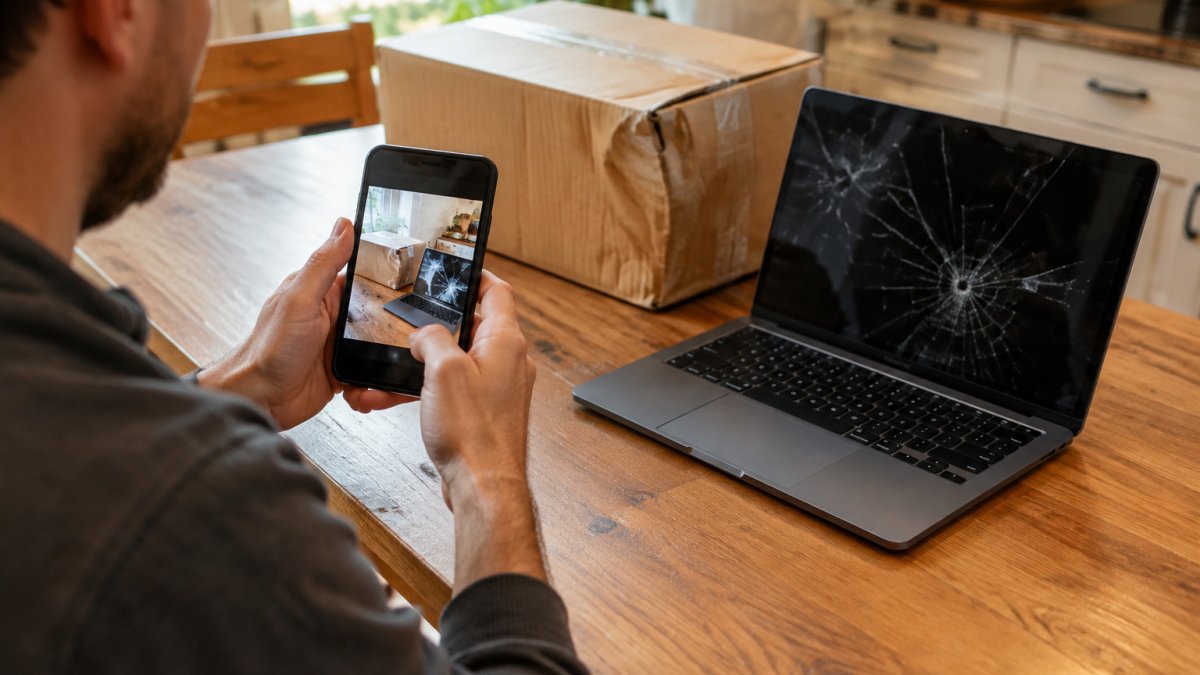
- Photo of the shipping label, with the tracking number and any carrier markings legible
- Photo of the outside box from all six sides, including every dent, tear, crush mark, or wet spot
- Photo of the packing material as you found it, before you remove the item
- Photo of the item from several angles, with the damage in close-up and a wider shot for context
- Photo of any serial number, model label, or asset tag to confirm the item matches the listing
- Video of the unboxing, if you can record it, start before you cut the tape
- Written note of the date, time, and carrier that delivered the package
Watch out: Do not discard the box, padding, or any packing slip until the claim is closed. Carriers and platforms routinely ask for the original packaging, and a missing box can sink an otherwise valid claim.
Beyond photos, preserve the paper trail. Save the listing page as a PDF or screenshot before the seller edits it, because descriptions and photos can change after a sale. Keep the order confirmation, the tracking history, and every message with the seller in one folder. If the platform dispute form asks for a damage description, write it in plain terms, "front-left corner crushed, screen cracked, no impact mark on inner foam", rather than "item broken." Specific language matches the photos and reads as credible.
A common pattern is that buyers photograph the broken item but not the box. That is backwards for a transit claim: the box is the evidence that the carrier handled it roughly. Photograph the box first, then open it on camera if you can. If the carrier offers a delivery photo or signature record, download it before it expires from the tracking page.
Finally, report the damage to the carrier as well as the seller. A carrier damage report can create a timestamp that supports your claim. You do not need to know yet who is liable, the point is to put the damage on record within the carrier's reporting window, which is often shorter than the marketplace's claim window.
The article's checklist maps the evidence to collect on arrival, and the table below summarises which item each photo or record serves.
| Evidence | What it proves | Note |
|---|---|---|
| Shipping label photo | Tracking and carrier identity | Keep labels legible |
| Outside box, six sides | Rough handling in transit | Include every dent, tear, or wet spot |
| Packing material, before removal | Packing condition | Photograph before unpacking |
| Item, close-up and wide | The actual damage | Add a wider shot for context |
| Serial or model label | Item matches listing | Confirms the item sold |
| Unboxing video | Sequence of discovery | Start before cutting tape |
| Delivery date, time, carrier | Timeline of arrival | Write it down immediately |
Who Is Responsible for an Item Damaged in Shipping
Responsibility depends on who handled the item and how it was packed, and the answer changes the claim route you should take. In general, the seller is responsible until the carrier accepts the package. After that, the carrier may be responsible for transit damage, but only if the item was packed to the carrier's standard.
That packing standard is the hinge. If the seller used a flimsy box, no cushioning, or reused worn packaging, the carrier can deny the claim on the ground that the item was improperly packed. In that case the seller still owes you a refund even though the carrier caused the physical damage.
Many buyers are surprised to learn that the seller usually files the carrier claim, not the buyer. Ask the seller directly whether they filed a carrier claim and whether shipping insurance was purchased.
Here is a practical sequence to follow:
- Preserve the packaging. Keep the box, padding, and label exactly as delivered. Carriers may request an inspection, and some require the item and packaging to be held for a set period.
- Report to the carrier. Start a damage report from the tracking page or by phone so the damage is timestamped within the carrier's reporting window.
- Notify the seller in writing. State what arrived, attach your photos, and ask whether they will file a carrier claim or refund you directly.
- Open the platform dispute if the seller does not resolve it. The platform can often refund you and pursue the seller or carrier on its own.
Watch out: Do not ship the item back before the seller or platform tells you to. Returning the item can destroy the packaging evidence a carrier inspection needs, and some platforms require you to hold the item until the claim is decided.
Federal rules under the Fair Credit Billing Act give cardholders a right to dispute billing errors, and the Consumer Financial Protection Bureau explains how that process works at CFPB guidance on credit card disputes. That route has its own deadlines, so check your card issuer's terms rather than assuming the platform timeline is the only one that matters.
What to Do When the Seller Doesn't Accept Returns
Some listings say "no returns." That does not always end your options. A no-returns policy usually does not cover items that arrive broken or not as described.
If the seller refuses or does not respond:
- Send one clear written request with your photos and the listing.
- Give the seller a short, reasonable deadline to reply.
- Open a case with the auction platform, which can often step in.
- Save every message so you can show the timeline.
Do not ignore the platform's dispute process. It is often the fastest route to a refund. To see how deposits are held and returned while a dispute is open, read how auction item deposits are collected and refunded.
Consumer Rights and Common Auction Site Policies
Auction platforms set their own rules, and those rules differ from one site to another. Read the buyer protection terms before you bid.
Federal and state consumer protection laws may also apply. The Federal Trade Commission explains basic rights about misleading product descriptions at FTC consumer guidance on online purchases. Your state attorney general's office can answer questions about local rules.
Policies can change, so check the current terms on the platform you used.
Telling Transit Damage from Undisclosed Defects
Transit damage happens after the seller ships the item. An undisclosed defect was already present before shipping. The difference matters because it decides who pays.
Look at the evidence:
- Transit damage usually shows on the outside box, such as crushed corners or punctures.
- An undisclosed defect may show inside the packing, with no sign of impact on the box.
- Disclosed damage was listed in the description, so the buyer accepted that condition.
When you check your photos, ask whether the outside box matches the inside damage. If the box looks fine but the item is broken, the problem was likely present before shipping. Then the listing is the key evidence. As a buyer on any auction site, you can also compare the listing photos and wording against what arrived.
Before you buy again, check how we describe condition on each item page. For more on spotting problems before you pay, read our guide on how to test used computer hardware before you buy: How to Test Used Computer Hardware Before You Buy. If you want to see how a clearly described listing reads, look at this example: tested and working laptop lot listing.
Booking Your Next Purchase with Confidence at KVSAuctions.com
Broken items are frustrating, but a clear process usually gets buyers a fair result. Document the damage, report it fast, and use the platform's dispute process if the seller stalls. Read each listing carefully before bidding, because the description often decides the outcome.
If you are unsure whether an item arrived as described, our guide on what happens when an auction item is not as described explains how that differs from arriving broken: what happens if an auction item is not as described. Register on KVSAuctions.com to start bidding.
Frequently Asked Questions
Who is responsible if an item arrives damaged?
Responsibility depends on when the damage happened and what the listing disclosed. If the seller shipped a damaged item or the damage was not described in the listing, the seller is generally responsible. If the package was damaged in transit, the carrier usually handles the claim, and the buyer should file it promptly with proof of the packaging condition. Document everything on arrival, keep the box and packing materials, and contact the seller within the platform's return window to find out which path applies to your order.
Can I get a refund if an auction item arrives broken?
Refund eligibility depends on the listing and the platform's policies; check the item description and current terms. Many marketplaces offer refunds when an item arrives significantly different from its description or broken without disclosure. Report the damage quickly, provide clear photos and video of the item and packaging, and request a return or refund through the platform's resolution process. Keep all communication in writing so you have a record if the case escalates.
What should I do if the seller doesn't accept returns?
A no-returns policy does not automatically cancel your rights. If the item arrived broken and the damage was not disclosed in the listing, most platforms still allow a dispute or claim. Contact the seller first with your evidence, then open a case through the auction site before the deadline.
What evidence should I collect when an auction purchase arrives broken?
Photograph the shipping label, the outer box, and any crushed or torn areas before opening it. Then photograph the item from several angles, including close-ups of the damage and any serial or model labels. Record a short video of unboxing if possible, and keep all packing materials until the claim is resolved. Save the listing screenshot showing the item description and condition, along with your order confirmation and tracking history.