 Comparison
Best Electronics and Collectibles Auctions With Quality Assurance
Quick Summary
The best electronics and collectibles auctions combine clear inspection disclosure, consistent condition grading, documented authenticity and transparent return and payment terms. Buyers should check what was tested, what is missing and what is untested before bidding, since quality assurance differs for electronics and collectibles.
- KVS Auctions sources products directly from government agencies and tests each used item before listing it.
- Score every seller on five criteria: inspection disclosure, grading scale, authenticity, return terms and payment protection.
- Electronics rely on functional testing, while collectibles depend on authentication, grading and provenance documentation.
- Read phrases like "power applied only" or "no power cord" because they change what you actually receive.
- Confirm the total cost in USD, including all fees, before the bid closes.
Table of Contents
- What Quality Assurance Means for Electronics and Collectibles Auctions
- Buying Used Electronics at Auction: New, Used and Refurbished Lots
- How KVS Auctions Tests and Certifies Its Listings
- How to Verify an Online Auction Seller Before You Bid
- Online Auction Payment Safety and Buyer Protection
- Electronics Quality Assurance Checklist for Your Next Bid
- Choosing Your Next Electronics Lot on KVS Auctions
- Frequently Asked Questions
What Quality Assurance Means for Electronics and Collectibles Auctions
Quality assurance in an electronics and collectibles auction is the process of checking an item's condition, function and description before it reaches you. Buyers still need to understand what each check covers and where it stops.
The current consumer electronics market is large and growing. Statista projects it will reach about 1.03 trillion U.S. dollars in 2026 (Statista consumer electronics market forecast). With that much volume moving through resale channels, inspection standards matter more than ever. Industry guidance also points toward automated quality assurance and updated inspection checklists that account for FCC and CPSC rules (The Inspection Company 2026 guide on consumer electronics defects).
Quality assurance usually covers three areas:
- Functional testing: Does the device power on, connect, and run its core functions?
- Condition grading: Is the cosmetic and physical state described accurately?
- Description accuracy: Does the listing state what is included, what is missing, and what is untested?
For collectibles, the last point carries the most weight. Electronics can be tested with a power cycle and a few diagnostics. Collectibles often depend on visual grading, provenance and documentation, which are harder to verify remotely. A listing that is candid about these limits is usually more trustworthy than one that claims everything is perfect.
A Practical Quality-Assurance Scorecard for Comparing Sellers
Most buyers compare listings by price and photos. A better approach is to score every seller on the same five criteria, using only what the listing and the platform publish. This turns a vague sense of trust into a repeatable check you can apply to any lot.
- Inspection disclosure: Does the listing state exactly what was tested (power-on, full function, cosmetic only) and what was not? A seller who says "tested for power-up only" is more useful than one who says "works."
- Condition grading scale: Is there a defined scale (new, open box, used, for parts) applied consistently across listings, or does each description use its own language?
- Authenticity and provenance checks: For collectibles, does the seller describe how authenticity was assessed (certificate, grading service, visual inspection) and provide documentation photos?
- Warranty and return terms: Are the return window, restocking fees and warranty coverage stated in the listing before you bid, or only in a general policy page?
- Payment and buyer protection: Is checkout secured, is the total cost shown before the bid closes, and is there a written process for items that do not match the description?
Score each criterion as clear, partial or missing. A seller with three clear scores and two partial scores is easier to evaluate than one with a single glowing paragraph. The criteria do not change between lots; only the evidence you expect does.
Where Electronics and Collectibles Diverge
Electronics quality assurance leans on functional testing and standardized diagnostics. Collectibles quality assurance leans on authentication, grading and provenance. A seller who is strong on one may be weak on the other. When you compare sellers, check whether their published process actually matches the category you are bidding on. A platform that tests electronics but offers only a visual once-over for collectibles should say so, and you should factor that into your score.
Buying Used Electronics at Auction: New, Used and Refurbished Lots
Auction lots fall into three broad conditions, and each carries a different level of risk. New lots are unused but may have damaged packaging. Used lots have been operated and may show wear. Refurbished lots have been repaired or restored, and the quality depends heavily on the process behind them.
The KVS catalog includes lots mixing new and used items. A recent large lot of miscellaneous electronics, for example, is sold as-is, with packaging on new items possibly damaged.
For budget buyers, the practical question is whether a lower price justifies the extra work. A used or as-is lot can deliver real value if you need cables, adapters, drives or parts. It is a poor choice if you need a working laptop on day one. Many buyers find that matching the lot type to the actual use case prevents the most common regret.
Watch out: Mixed lots often contain items you did not expect. Count the items listed against the photos and the description before you assume the lot is complete.
How KVS Auctions Tests and Certifies Its Listings
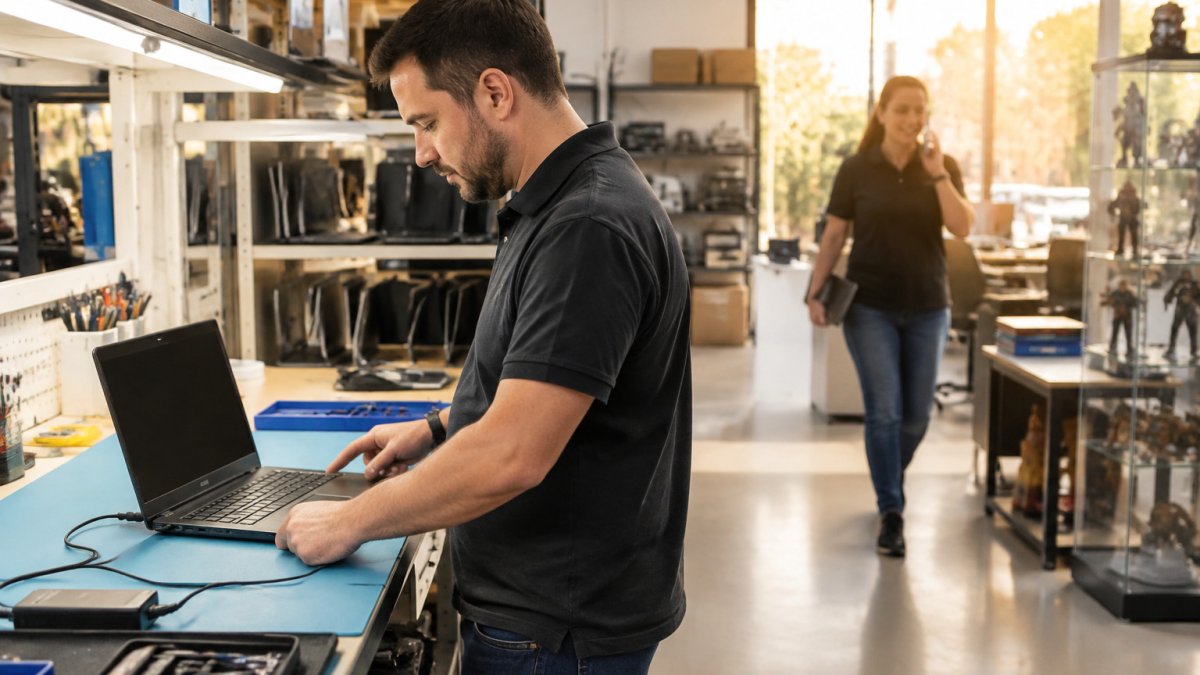
KVS Auctions works directly with government agencies to source its products, and each used item listed for sale is rigorously tested and certified to work before it is offered. Some items are sold for parts, evaluated only for power-up, or marked as not containing data, and the listing says so.
Testing standards vary by category. Medical equipment, for example, is tested only for functionality. We do not test or certify it for patient use, and it is up to the buyer to meet any regulatory certification requirements for their setting. Listings for medical items state this explicitly.
What Functional Testing Covers for Electronics
Listings should state what testing was performed, because "tested" alone does not tell you whether the battery was checked or only the power light.
Watch out: A device that powers on but has not been tested for battery health, storage integrity or operating system activation can still fail on day one. Read the testing details in the listing before you assume a laptop is ready to use.
How Collectibles Are Authenticated and Graded
Collectibles are assessed differently because function is not the measure. Authentication can involve checking provenance (documented ownership history) and physical markers, and condition is best described in the listing itself.
Ask whether any certificate, original packaging or provenance paperwork is included with a collectible, and whether it is photographed in the listing.
Reading Item Descriptions for Incomplete or As-Is Lots
Some items are sold incomplete and are intended for technically skilled buyers. Laptops may be sold without a hard drive and without an operating system, and buyers need the know-how to refurbish these items themselves. Read each item's full description before placing a bid. Look for phrases such as "power applied only," "no accessories," "no power cord," or "evaluated as not containing data," because each one changes what you actually receive.
Photos help, but they do not replace the written description. Check whether the photos match the item count, whether visible damage is shown, and whether the lot includes the accessories you need. For collectibles, check whether the photos show the authentication markers and any flaws called out in the description.
How to Verify an Online Auction Seller Before You Bid
Verifying a seller comes down to checking what they publish and how they respond. Start with the seller's listing history and the consistency of their descriptions.
Look at the transaction process as well. Only verified buyers should be able to bid, and every financial transaction should be secured.
Be honest about what you can confirm. Reviews and seller ratings help, but they reflect past behavior, not guarantees about a specific lot. Use them as one input alongside the listing details.
Online Auction Payment Safety and Buyer Protection
Payment safety depends on how the platform handles money between bid and delivery. Make sure the checkout process uses secured transactions and that you can see the total cost before you commit. Hidden fees are a common complaint, so confirm the final amount in USD before the bid closes.
Buyer protection works best when the rules are written down before you bid. Check what the platform says about item descriptions that do not match the delivered goods, damaged shipments, and non-working items. Ask what documentation is needed to start a claim and how long you have to file it.
Keep records of your bid confirmation, payment receipt, listing description and photos.
Electronics Quality Assurance Checklist for Your Next Bid
Use this checklist before placing any bid on electronics or collectibles:
- Confirm the item condition: new, used, refurbished, as-is, or parts only
- Read the full description, including any "untested," "incomplete," or "evaluated" notes
- Check the item count against the photos and the stated lot contents
- Identify the included accessories and what is missing, such as cords, drives or operating systems
- Confirm the total cost in USD, including all fees
- Verify the seller's listing history and description accuracy
- Confirm the payment method is secured before you commit
- Note the buyer protection terms and the deadline for filing a claim
- Save the listing, photos and receipt in case you need to file a claim
The checklist below condenses the main points to verify before placing any bid on electronics or collectibles.
| Check | What to confirm | Why it matters |
|---|---|---|
| Condition | New, used, refurbished, as-is or parts only | Sets the level of risk |
| Description | Read "untested," "incomplete" and "evaluated" notes | Shows what you actually receive |
| Item count | Match photos to the stated lot contents | Catches missing items |
| Accessories | Cords, drives or operating systems included | Affects day-one use |
| Total cost | Confirm the full price in USD | Avoids hidden fees |
| Seller | Check listing history and description accuracy | Gauges reliability |
| Payment | Confirm the method is secured | Protects your money |
| Protection | Note terms and claim deadline | Prepares you for disputes |
Choosing Your Next Electronics Lot on KVS Auctions
The right lot depends on what you need. For a budget-conscious student or a hobbyist who enjoys repairs, a large mixed lot can offer many useful parts for the price. The lot of miscellaneous electronics listed at $287.00 is one example, with a mix of cables, adapters, power supplies and drives. For a smaller purchase, the $42.00 lot of miscellaneous electronics includes a keyboard, ink cartridges and a digital voice recorder.
For a small business that needs equipment on a schedule, favor lots with clear condition notes and full descriptions. Lots marked as sold as-is or evaluated only for power-up suit buyers who can test and repair. Lots with more defined inventories and clear statuses are better for operations that cannot absorb surprises.
Our recommendation is simple: match the lot to your skills and timeline, read the full description, and check the checklist above before you bid. New auctions are posted regularly, so you can compare what is available and choose the lot that fits your next project.
Frequently Asked Questions
How do I know the electronics I buy at auction are in the condition listed?
Start with the full item description rather than the photos alone. KVS Auctions states that each used item is rigorously tested and certified to work before listing. Some lots are sold incomplete, for example laptops without a hard drive or operating system, and are meant for buyers with the skills to finish them. Check for words such as as-is, incomplete or sold for parts, and compare the listed accessories with what you expect to receive before placing a bid.
What happens if an auction item arrives broken or does not work?
Read the listing's return and warranty terms before bidding. Keep the packaging, photograph any damage on delivery, and contact KVS Auctions promptly with your order details. Documenting the problem quickly gives you the strongest position to request a resolution.
What should I check before buying a used electronics lot online?
Confirm whether the lot is new, used or refurbished, and whether the item is complete. Look for the model number, the storage and memory specifications, and whether power adapters or batteries are included. Check the listing's bidding rules before you bid. A short checklist of these items prevents most surprises when the lot arrives.
Is my payment safe when I bid on an online auction?
KVS Auctions states that every financial transaction is secured and that only verified buyers can take part in bidding. Pay only through the platform's own checkout, never through direct transfers requested by outside parties, and keep your order confirmation and bid history. Those records help if a payment or credit question comes up later.