 ultimate-guide
Buying Wholesale Electronics for Resale: 2026 Guide
Table of Contents
- Buying Wholesale Electronics for Resale: What Actually Decides Your Profit
- The Four Sourcing Channels Compared
- How to Vet Wholesale Electronics Suppliers Before You Wire Money
- Electronics Liquidation Lots: Grading, Manifest Accuracy, and Hidden Risk
- Government Surplus Electronics Auctions: How the Bidding Actually Works
- Calculating Electronics Resale Profit Margin Before You Bid
- Condition Standards, Testing, and Returns: What to Expect
- Compliance, Certificates, and E-Waste Rules for Resellers
- Conclusion
- Frequently Asked Questions
Last Updated: October 18, 2026
Buying Wholesale Electronics for Resale: What Actually Decides Your Profit
Profit in buying wholesale electronics for resale rarely comes down to the price you pay. It comes down to what you can prove about each unit before you commit cash. At KVSAuctions.com, we sell government surplus and refurbished electronics through auction, fixed-price, and classified listings, and we watch buyers succeed or fail on the same question: did they know what they were getting?
Wholesale electronics is the practice of buying devices in volume, whether new overstock, liquidation pallets, or government surplus, at a per-unit cost low enough to absorb testing, grading, and returns. The margin lives in that gap.
Below, we break down the four sourcing channels, how to vet suppliers, how liquidation grading really works, and how to calculate margin before you bid. Most guides skip the part that matters: the cost of units you cannot resell.
The Four Sourcing Channels Compared
Each channel trades price against certainty, and the trade is rarely even.
- Authorized distributors and manufacturer programs cost the most per unit but arrive sealed, warrantied, and documented. Best for resellers who need predictable inventory.
- Wholesale electronics suppliers and closeout dealers sit in the middle. You get case quantities and some paperwork, but condition claims vary wildly by seller.
- Electronics liquidation lots offer the lowest per-unit cost and the highest variance. You are buying a manifest, not a guarantee.
- Government surplus electronics auctions combine genuine equipment with as-is terms. Pricing depends on the lot, the competition in the room, and the pickup deadline.
A common mistake is chasing the cheapest channel first. In practice, the cheapest lot with a 30% untestable rate is more expensive than a distributor invoice.
How to Vet Wholesale Electronics Suppliers Before You Wire Money
Start with the paperwork, not the price list. A legitimate supplier will answer document requests without hesitation.
Documents and Signals Worth Checking
- Business registration and a physical address you can verify
- Resale certificate acceptance and proper tax documentation
- Written condition definitions, not just "tested" or "working"
- Return policy in writing, including who pays return freight
- Serial number tracking on high-value units
- References from buyers in your volume range
Red flags worth walking away from: pressure to pay by wire only, refusal to provide a sample order, and manifests that describe every unit identically. According to the Federal Trade Commission's guidance on business scams, wire transfer requests are a hallmark of fraudulent suppliers because the money is nearly impossible to recover.
Order small before you order deep. One pallet tells you more than ten phone calls.
Electronics Liquidation Lots: Grading, Manifest Accuracy, and Hidden Risk
Liquidation grading is where resale math goes wrong. A manifest is a seller's description, not an inspection report.
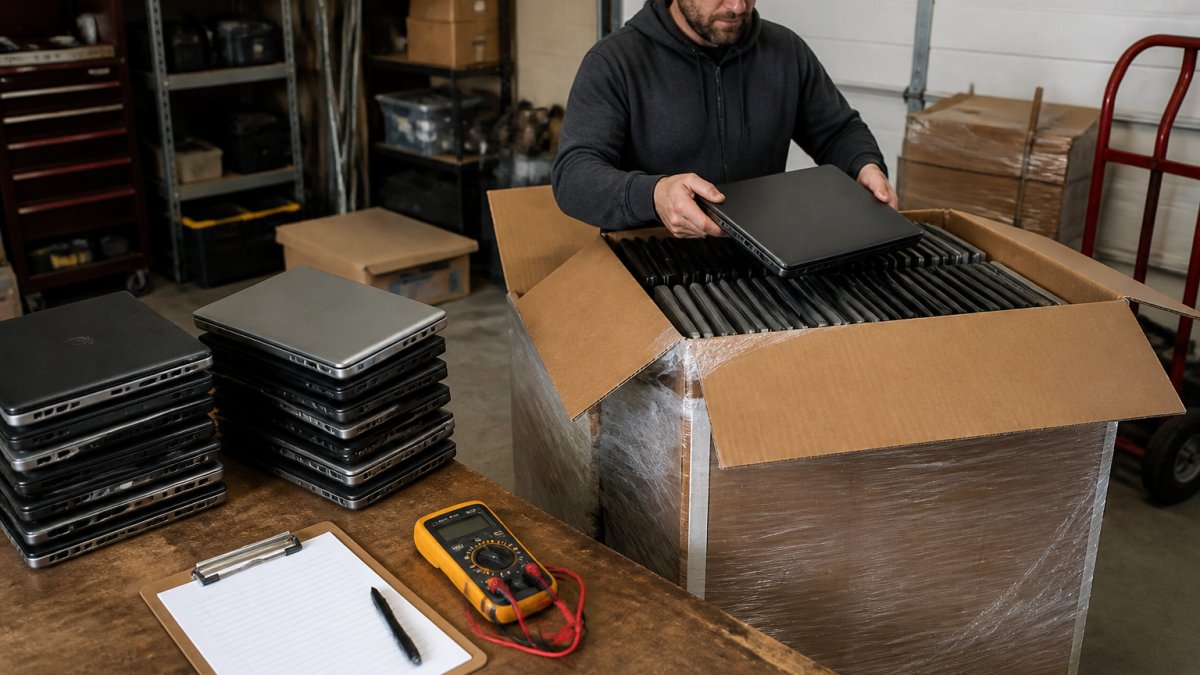
Typical grade labels you will encounter:
| Grade | Typical Meaning | Resale Risk |
|---|---|---|
| New / sealed | Unopened retail packaging | Low, verify seals |
| Refurbished | Tested and restored by seller | Medium, ask for test scope |
| Used - working | Powers on, untested beyond that | High |
| Salvage / parts | Not functional, for components | Very high |
Government Surplus Electronics Auctions: How the Bidding Actually Works
Government surplus electronics auctions sell property that agencies no longer need. The equipment is real, the terms are strict, and the bidding rewards preparation over speed.
Fees, Deposits, and Pickup Logistics
Budget for more than the hammer price. Buyer's premiums, registration deposits, and removal deadlines all affect your true cost, and the specific terms are set per auction, so read each listing's terms before you register. The General Services Administration's surplus property program publishes how federal personal property disposal works, which helps you understand where lots originate.
Pickup is the silent margin killer. Confirm the location, the loading dock hours, and whether you need to bring labor and equipment. A lot that requires a rented truck and two helpers can erase a thin spread.
Calculating Electronics Resale Profit Margin Before You Bid
Run the math backward from resale value, not forward from the bid.
Landed cost = winning bid + buyer's premium + sales tax + freight + testing labor + expected returns.
Then subtract your realistic resale price, not the best-case one. If a device sells for a range, use the low end.
A simple worked example: a lot of 20 laptops, ten of which test clean and ten of which need parts. Price the ten clean units at your conservative resale figure, add a parts value for the rest, and compare the total to landed cost. If the spread is thin on paper, it will be negative in practice.
If you cannot name the resale buyer before you bid, you are speculating, not reselling.
Condition Standards, Testing, and Returns: What to Expect
Condition standards vary by seller, so define them yourself before purchase. Ask specifically whether "tested" means booted to BIOS, passed a full diagnostic, or ran a battery health check.
Returns deserve the same scrutiny. Many surplus and liquidation sales are final or as-is, which shifts all risk to you. Before bidding, confirm in writing:
- The return window and who pays return shipping
- Whether refunds are cash or credit
- What documentation a return requires
For resale buyers, the Environmental Protection Agency's guidance on used electronics is worth reading on responsible handling, since tested and untested devices carry different end-of-life obligations.
Compliance, Certificates, and E-Waste Rules for Resellers
Compliance is not optional once you resell at volume. Several obligations apply regardless of size.
Data security. Devices that stored data must be sanitized before resale. The National Institute of Standards and Technology's media sanitization guidelines describe accepted methods for wiping storage.
E-waste handling. Many states restrict disposal of electronics in landfills and require recycling through permitted channels. Rules vary by state, so verify your own jurisdiction's requirements rather than assuming.
Certifications. If you claim responsible recycling, work with certified processors. Our parent company, KVS Computers, holds R2V3 certification for electronics recycling, which is the kind of credential buyers and regulators look for.
Conclusion
The hardest part of buying wholesale electronics for resale is not finding inventory. It is resisting lots you cannot verify, price, or move. Build your landed-cost model first, demand documentation from every supplier, and treat manifests as claims rather than facts.
KVSAuctions.com gives resellers access to government surplus electronics, refurbished devices, and collectibles through auction, fixed-price, and classified listings, backed by an R2V3-certified recycling operation. Register to start bidding, and bring your spreadsheet.
Frequently Asked Questions
Where can I buy wholesale electronics for resale?
Four channels cover most resellers: authorized distributors, independent wholesale electronics suppliers, liquidation marketplaces selling palletized electronics liquidation lots, and government surplus electronics auctions. Distributors usually require a resale certificate and business account. Liquidation and surplus channels sell at lower entry points but with less predictable condition. Many resellers mix channels: surplus auctions for high-margin one-off inventory, distributors for repeatable SKUs that customers order regularly.
How do I find reliable wholesale electronics suppliers?
Start with references and verifiable paperwork rather than cold outreach. Ask for a resale certificate requirement, a sample order option, and written condition definitions. Check whether the supplier publishes grading standards and whether they accept returns on dead-on-arrival units. Order a small test lot before committing to volume, and confirm the serial numbers on arrival match the manifest. Suppliers who resist a small trial order or refuse to define grading in writing are a warning sign.
What is the difference between wholesale, liquidation, and refurbished electronics?
Wholesale means buying new or like-new stock in volume at a trade price, usually from a distributor. Liquidation means buying excess, returned, or overstock inventory, often by the pallet, with condition ranging from sealed to untested. Refurbished means the device has been inspected, repaired where needed, and graded for resale. Each carries a different risk profile: wholesale is predictable but lower margin, liquidation is cheaper but variable, and refurbished carries the testing cost but sells at retail-adjacent prices.
How do I calculate electronics resale profit margin?
Add every cost before comparing to sale price: unit cost, buyer's premium or auction fees, inbound shipping, testing labor, replacement parts, payment processing, marketplace fees, and return allowances. Then subtract from your realistic selling price, not the highest listing you can find. A lot that looks cheap at the bid price can turn negative once a 15% buyer's premium, freight, and a 10% dead-unit rate are included. Track this per lot, not per month, so weak categories become visible.
Do I need a resale certificate to buy wholesale electronics?
Most distributors and many wholesale electronics suppliers require a valid resale certificate or seller's permit before they will sell to you tax-exempt. Requirements vary by state, so confirm with your state's revenue department what form applies and whether your certificate covers the categories you plan to sell. Auction and surplus channels sometimes sell to the public without one, but you still owe sales tax on your own resale transactions where applicable.
What are the risks of buying electronics lots for resale?
The main risks are condition variance, missing or inaccurate manifests, dead-on-arrival rates, data-bearing devices that need wiping, and freight costs that erode thin margins. Lots sold as-is usually carry no return path, so the bid price must absorb failures. Battery health on laptops and locked devices are the two most common surprises. Inspect quickly on arrival, document everything with photos, and price your bids assuming a percentage of every lot will not resell at full value.