 How-to
How to Know How Long Surplus Auctions Take
Last Updated: November 22, 2026
Quick Summary
Surplus auctions take as long as each sale's listing specifies, since length depends on the format, the agency, and the item. Bidding is often the shortest phase, while payment and pickup can add days or weeks after the win.
- Check the "closes" or "ends" line in each listing and confirm its time zone.
- Pay before the deadline stated in the sale terms to keep your win.
- Pickup windows reported by sources range from roughly 5 to 15 business days.
- Set reminders for the close time, payment deadline, and pickup window as soon as you win.
- Keep proof of payment and your invoice until pickup is complete.
Table of Contents
- How Long Surplus Auctions Usually Run
- The Government Surplus Auction Bidding Process, Step by Step
- Surplus Auction Payment Deadline and Accepted Payment Methods
- Surplus Auction Pickup Deadline and Removal Rules
- Factors That Make a Surplus Auction Take Longer
- How to Buy Government Surplus Property Without Missing a Deadline
- Plan Your Next Bid With the Full Timeline in Mind
- Frequently Asked Questions
How Long Surplus Auctions Usually Run
If you are wondering how long do surplus auctions take, the honest answer is that it depends on the format, the agency, and the sale. First, check whether government surplus auctions in Florida are worth your time before you commit to a sale. There is no single timeline that covers every government surplus auction, so check the schedule and terms on each listing.
That estimate breaks down into four phases you can plan around:
- Registration and verification: depends on the agency
- Bidding window: set by each sale's closing schedule
- Payment: set by the sale terms after the win
- Pickup and removal: set by each sale's removal rules
Sales vary in length, and each one states its own schedule.
How Auction Duration Differs by Format and Item Type
The format changes the timeline more than anything else. Timed online auctions close on a fixed or staggered schedule, and the schedule for each sale is stated in its listing.
How to Estimate the End Time From a Listing
Start with the listing itself. Look for the "closes" or "ends" line in the listing. If you cannot find it, read the sale terms and note any preview or inspection days before bidding opens.
Watch out: time zones can catch buyers off guard. A sale that closes at 6 p.m. local time may end earlier than you expect if you live in another zone, so confirm the time zone shown on the listing before you set a reminder.
Plan around the listing, not a guess. Every sale states its own open and close times.
The Government Surplus Auction Bidding Process, Step by Step
The bidding process generally moves through stages including registration, bid submission, closing, winner notification, and payment.
Registration and Bidder Verification
Many platforms require you to create an account and verify your identity before you bid, so do this early.
Bid Submission and Auction Closing
Once registered, you place a bid on a specific lot. Some online surplus auctions use a fixed-close format, while others stagger closing times across lots.
What Happens in the Final Minutes of a Timed Auction
Some timed auctions extend the closing time when a bid arrives in the final minutes, while others end at a fixed moment. Check the sale rules to see which applies.
Winning Bidder Notification
After a lot closes, the platform may notify the winning bidder, so check your account if you do not receive a notification.
How Long the Bidding Phase Takes
Bidding itself is often the shortest part of the process, while payment and pickup can take longer after the win.
Surplus Auction Payment Deadline and Accepted Payment Methods
After you win, the payment deadline is set by the agency and stated in the sale terms. Some sales give a short window, while others allow more time. Pay before the deadline to keep your win and avoid delays in pickup.
Confirm which payment methods are allowed in the sale terms before you bid.
Surplus Auction Pickup Deadline and Removal Rules
Pickup is often the step that surprises buyers. According to GovAuctions.app's step-by-step guide to government surplus auctions, buyers commonly have roughly 5 to 10 business days after an award to pay and arrange pickup, though this varies by sale.
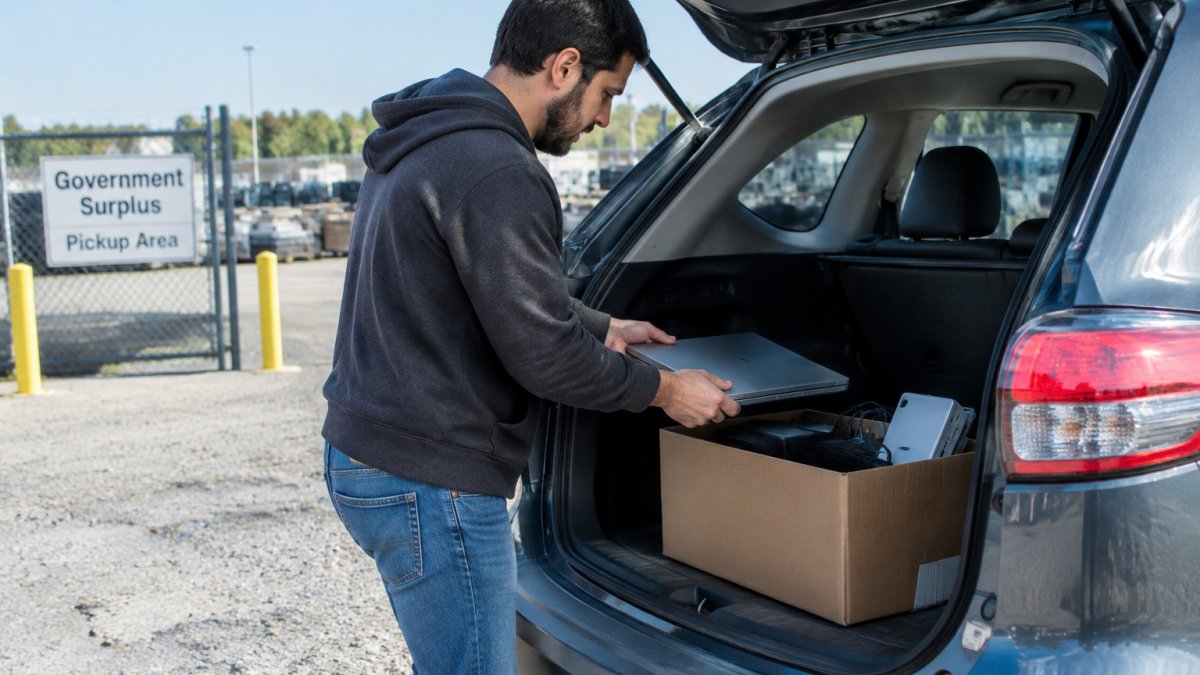
Another guide reports that buyers typically have 5 to 15 business days to collect an item after payment clears. BidProwl's 2026 guide to government auctions notes that the pickup location is listed in the auction details, so check it early.
For GSA sales, BidProwl's GSA Auctions FAQ describes a 15 calendar day removal window from payment. Confirm the exact deadline in your own sale terms.
- Read the removal deadline before you bid
- Plan transport in advance, especially for large items
- Do not assume a fixed window applies to every sale
The article summarises the pickup windows reported by different sources, which buyers should check against their own sale terms.
| Source | Reported pickup window | Note |
|---|---|---|
| GovAuctions.app guide | Roughly 5 to 10 business days after award | Pay and arrange pickup; varies by sale |
| BidProwl 2026 guide | 5 to 15 business days after payment clears | Pickup location listed in auction details |
| BidProwl GSA FAQ | 15 calendar days from payment | GSA sales; confirm in your sale terms |
Factors That Make a Surplus Auction Take Longer
Several factors can stretch the timeline:
- Items that need special handling
- Sales that require in-person inspection or preregistration
Delays are not always a sign of a problem. They often reflect how the agency runs its sales.
How to Buy Government Surplus Property Without Missing a Deadline
Set reminders for the close time, the payment deadline, and the pickup window as soon as you win. Keep proof of payment and your invoice.
For practical buying tips, see our guide on buying surplus tech safely.
Plan Your Next Bid With the Full Timeline in Mind
Before you bid, map out the whole timeline: the close time, the payment deadline, and the pickup window. Compare sales on the same platform to see which schedules suit your plans. If you are weighing where to shop, our comparison of AllSurplus and GovDeals for electronics can help.
The bidding window is only the start. Knowing the full timeline is what keeps a win from turning into a missed pickup.
Frequently Asked Questions
How long does a government surplus auction last?
Most online government surplus auctions run for about a week. Duration varies by agency and sale, so always check the closing time shown on the specific listing before you bid.
How soon do you have to pay after winning a surplus auction?
Payment windows differ by platform and sale. Read the sale terms for your exact payment deadline, since missing it can cost you the item.
What happens if you miss the pickup deadline for a surplus auction?
Removal deadlines are set for each sale. Confirm the removal rules in the listing terms and plan your pickup as soon as payment clears.
How long do you have to pick up an item after winning a government auction?
The exact timing depends on the sale, so check the auction details for the pickup location and deadline before you commit to a bid.