 Listicle
How to Find the Best Electronics Categories for Resale Profit in 2026
Last Updated: November 26, 2026
Quick Summary
The best electronics categories for resale profit in 2026 are smartphones and tablets, game consoles, laptops and computers, cameras, and vintage audio gear, because each pairs steady demand with a wide gap between buying and selling price. Used phones alone carry reported profit margins of 25% to 40%.
- The global second-hand electronics market reached USD 85 billion in 2024, with projections of USD 150 billion by 2031.
- Game consoles turn fastest and need the least testing effort, but per-unit profit is thin, so you need volume.
- Vintage audio carries the widest margin and largest per-unit profit, but capital sits in inventory for one to three months.
- Skip any lot whose projected net margin falls below 15% after all costs, because the estimate is optimistic.
- Avoid lots with account-locked devices, missing power supplies, or vague condition notes, which predict returns and dead inventory.
Table of Contents
- What Are the Best Electronics Categories for Resale Profit in 2026?
- Quick Comparison: Margin, Sell-Through, and Testing Effort
- Electronics With the Highest Resale Value
- How to Evaluate Electronics Lots for Resale
- Buying Wholesale Electronics for Resale: Costs That Eat Your Margin
- Best Electronics to Resell on eBay
- Categories to Avoid and How to Spot a Bad Lot
- Register to Bid on Tested Surplus Electronics
- Frequently Asked Questions
What Are the Best Electronics Categories for Resale Profit in 2026?
The best electronics categories for resale profit in 2026 are smartphones and tablets, game consoles, laptops and computers, cameras, and vintage audio gear, because each combines steady demand with a wide gap between buying price and selling price. Buyers in these categories generally already know what their devices are worth, which can shorten time on market.
The global second-hand electronics market reached USD 85 billion in 2024, with projections of USD 150 billion by 2031, according to market analysis of second-hand electronics. Used phones alone carry reported profit margins of 25% to 40%, per 2026 eBay selling guide.
Below, we break down each category by margin, sell-through rate, and testing effort so you can pick the ones that fit your budget and skill level.
Quick Comparison: Margin, Sell-Through, and Testing Effort
Headline margin ranges are where most guides stop, and that is why so many new resellers lose money on categories that look profitable on paper. The table below adds the two numbers that decide whether a category actually pays: estimated net profit per unit after all costs, and typical days to sale.
| Category | Typical Gross Margin | Est. Net Profit per Unit (after fees, shipping, repair) | Typical Days to Sale | Testing Effort | Best For |
|---|---|---|---|---|---|
| Smartphones & tablets | 25-40% | $40-$120 | 7-14 | Medium | Beginners with carrier knowledge |
| Game consoles | 20-35% | $25-$70 | 5-10 | Low | First-time flippers |
| Laptops & computers | 15-30% | $30-$100 | 14-30 | High | Buyers with technical skills |
| Cameras | 20-40% | $50-$150 | 14-45 | Medium | Niche resellers |
| Vintage audio | 30-50% | $60-$200 | 30-90 | High | Patient specialists |
Typical Days to Sale
Read the table left to right and the trade-off becomes clear. Consoles turn fastest and cost the least effort to test, but the dollar profit per unit is thin, so you need volume. Vintage audio carries the widest margin and the largest per-unit profit, but capital sits in inventory for one to three months, which means fewer turns per year and more risk that a unit arrives damaged or develops a fault after listing.
A worked example shows why gross margin misleads. Take a console bought for $90 with a $12 buyer premium and $15 shipping in. Test it, replace a missing controller for $20, and sell for $180. The sell-side platform fee at a typical 13% takes about $23, and outbound shipping runs $18. Net profit is roughly $2, a 1% return on a 100% gross margin.
Testing effort is a real cost even when you do the work yourself. Budget your time the same way you budget purchase price.
Watch out: a category with a wide margin range and a long days-to-sale figure can tie up your entire sourcing budget in one quarter. Cap how much of your capital sits in slow movers until you know your own sell-through numbers.
Electronics With the Highest Resale Value
Smartphones and tablets are widely resold because demand is broad and buyers replace them regularly.
Smartphones and Tablets
Phones are the single largest revenue segment in the second-hand electronics market, according to Data Insights Reports market breakdown. That scale means constant buyers.
Watch out: locked devices and iCloud-locked tablets are the biggest money sink in this category. Verify activation status before you bid, not after.
The Apple iPhone 8 AT&T 64GB listing is offered at $240.00 and is sold as is, so condition matters.
Game Consoles, Cameras, and Vintage Audio
Game consoles, iPads, vintage audio equipment, and cameras are reported to sell for $150 to $400 each, per Underpriced resale analysis. Consoles are the easiest entry point: test the disc drive, check the controller, confirm the power supply, and you are done.
How to Evaluate Electronics Lots for Resale
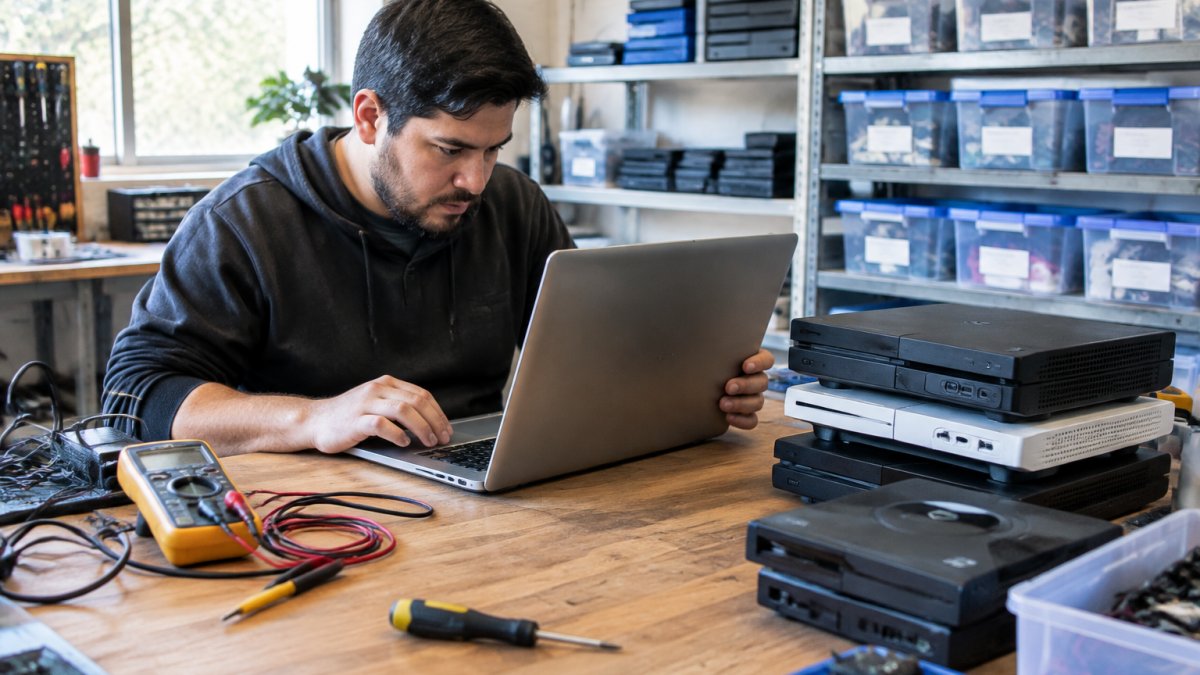
Evaluate a lot by testing function first, then condition, then completeness. A lot that powers on but is missing cables, chargers, or mounts costs you money in replacement parts before it ever sells.
The Testing and Safety Checklist
Use this checklist on every lot before you commit:
- Power on and confirm boot sequence
- Test all ports, buttons, and drives
- Check battery health and charge cycles
- Verify no account locks or activation locks
- Confirm included accessories match the listing
- Inspect for liquid damage, cracks, and missing screws
- Photograph everything on arrival
For a deeper walkthrough, read our guide on how to test used computer hardware before you buy. It covers the bench tests that catch problems before they become returns.
Buying Wholesale Electronics for Resale: Costs That Eat Your Margin
Wholesale sourcing looks profitable until you build the full landed cost. The purchase price is only the first line. Buyer premiums, inbound shipping, testing time, replacement parts, sell-side platform fees, outbound shipping, and return losses each take a bite, and the order in which you add them changes which lots are worth bidding on.
Build the model in this order so nothing hides:
- Hammer price. What you actually bid.
- Buyer premium. At KVS Auctions this is 8%, compared with an industry average around 12%, so a $200 hammer price costs $16 here versus $24 elsewhere. That $8 difference is pure margin on a thin lot.
- Inbound shipping and handling. Freight on a pallet of laptops or a crate of receivers can run $50-$200 depending on weight and distance. Ask for a shipping quote before you bid, not after.
- Testing and repair. Parts plus your time. A $15 fan, a $25 battery, or a $40 screen adds up fast; two hours of bench time at a $25-per-hour opportunity cost adds $50 more.
- Sell-side platform fee. Marketplace fees commonly run about 13% on electronics, and payment processing can add roughly 3%. On a $300 sale that is close to $48 before you ship.
- Outbound shipping and packaging. A laptop ships for $20-$35 with insurance; a console for $15-$25; a vintage receiver can exceed $50 because of weight and the packing materials required to survive transit.
- Return reserve. Set aside 5-10% of revenue for returns, partial refunds, and items that arrive damaged. Electronics return rates run higher than most categories because buyers expect flawless function.
Run the math on a real lot. Suppose you win five laptops for $400, pay an 8% premium ($32), and spend $80 inbound. Two need $40 batteries each and one needs a $60 SSD, so parts are $140, and testing eats five hours ($125 at opportunity cost).
That is why a threshold helps. A common rule among resellers is to skip any lot whose projected net margin falls below 15% after all costs, because the estimate is optimistic and the downside is real. If the model says 15%, treat it as break-even and walk away.
Platform choice changes the math, so price the same item on more than one venue before you commit. Local pickup marketplaces avoid outbound shipping and return shipping but limit your buyer pool and usually fetch a lower price. National marketplaces reach more buyers and support higher prices but add fees, shipping, and return exposure.
Watch out: inbound shipping quotes requested after the auction closes are the most common reason a winning bid turns into a loss. For supplier vetting and margin math in more detail, see our guide on buying wholesale electronics for resale.
Best Electronics to Resell on eBay
Electronics is eBay's most popular marketplace category at 16.4% of items, according to eBay's high demand items guide. That traffic is why so many resellers start there.
The best electronics to resell on eBay are smartphones, game consoles, laptops, and cameras, because each has a deep pool of completed listings you can use for price comparison before you list. Search sold listings, not active ones, to set your selling price.
A word of caution: eBay's fees and return policy favor buyers. Build those costs into your selling price or your margin disappears. In eBay's 2026 Recommerce Report, 27% of sellers named Electronics & Computers among their popular categories, per eBay's 2026 Recommerce Report.
Categories to Avoid and How to Spot a Bad Lot
Avoid any lot with account-locked devices, missing power supplies, or vague condition notes. Those three signals predict returns and dead inventory more reliably than any other warning sign.
Blurry images, no model numbers, and "sold as is" with no testing claim are your cue to walk away. Before you bid on anything questionable, read our breakdown of the risks of buying as-is electronics and our guide to what to check in auction item photos before you bid.
Batteries and accessories are the other trap. A cheap lot of phone cases or cables rarely clears fees after shipping. Skip categories where the per-unit value is too low to justify handling.
Register to Bid on Tested Surplus Electronics
The categories above only pay off if you source them at the right price, and that starts with a supplier you can trust. KVS Auctions is operated by an R2V3 Certified electronics recycling company, and every device is tested by trained technicians before it lists. Only verified buyers can bid, and every financial transaction is secured.
Government surplus sourcing gives you access to laptops, desktops, mobile devices, and collectibles through auction, fixed-price, and classified listings. New auctions post regularly, and the bidding process is built to be simple for first-time buyers.
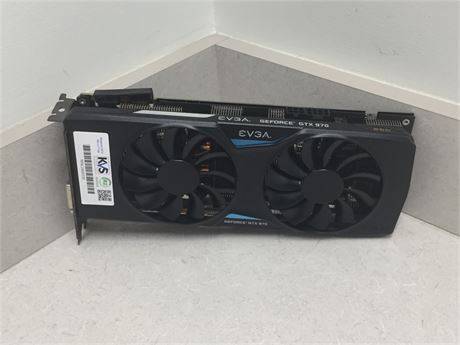
Start with a low-risk entry point like the Nvidia EVGA GTX 970, 4GB GDDR5 at $50.00, a tested and working GPU that reports no issues. Then browse live surplus electronics categories and register to bid on the next round.
The resale market rewards buyers who do the math before they bid, not after. KVS Auctions gives you tested government surplus electronics, an R2V3 certified supply chain, and an 8% buyer fee that keeps more profit in your pocket. Register with KVSAuctions.com and start sourcing tested devices at prices that leave room for margin.
Frequently Asked Questions
What electronics have the highest resale value?
Smartphones and tablets carry the highest resale value per unit, and they are the largest revenue segment of the second-hand electronics market. High-end devices hold value best, but check that phones are unlocked and not account-locked before you bid.
How do you evaluate an electronics lot before buying it?
Read the listing grade first, then confirm what is missing. A lot marked Hardware Functional means the unit powers on and works; Used Fair means cosmetic damage is expected. Ask whether drives were sanitized, whether batteries are included, and whether items are account-locked. KVS Auctions lists each item with a condition grade and notes missing accessories, so compare that against your repair and shipping costs before you set a maximum bid.
How do you calculate profit when reselling electronics?
Start with your selling price, then subtract the buying price, platform fees, shipping, repair parts, and your time. KVS Auctions charges an 8% buyer fee, below the 12% industry average, so a $150 laptop costs $162 before shipping. If it resells for $260 with $20 in shipping and $26 in marketplace fees, your net is about $52. Run that math per category, not per item, because one dead unit in a lot can wipe out the gains.
Where can you find electronics to buy for resale?
Government surplus auctions are the most consistent source because agencies retire equipment in bulk and the listings are documented. KVS Auctions sells tested government surplus laptops, desktops, phones, and accessory lots, with every device checked by trained technicians at an R2V3 certified electronics recycler. Lots range from a single $50 graphics card to pallets of networking gear, so beginners can start small and scale into wholesale volumes.